Travel guide
Rome, Italy
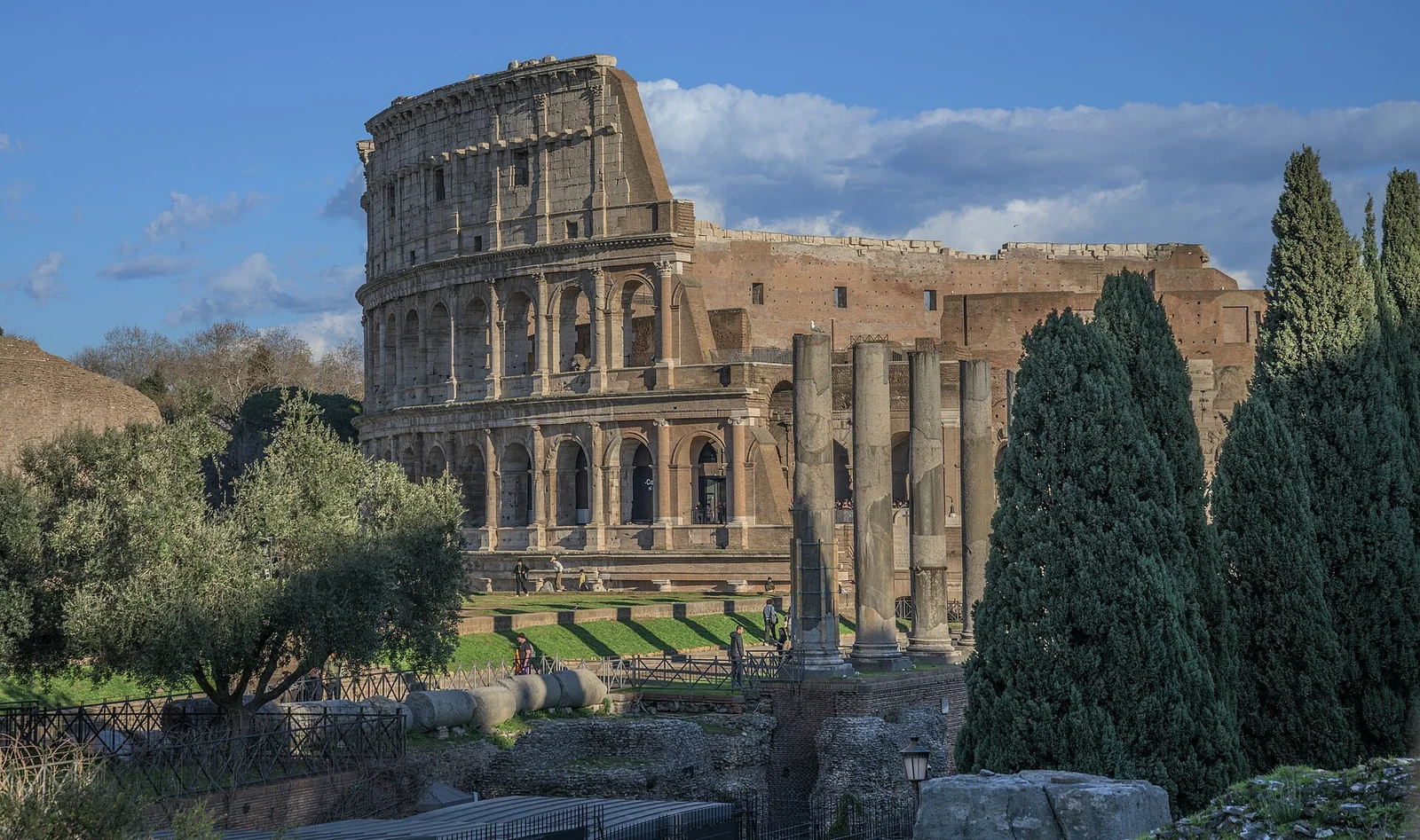
Colosseum: ancient Rome in focus
Discover the Flavian Amphitheatre in Rome's archaeological heart. Its surviving structure tells a story of spectacle, engineering and changing uses.
Photo: Wilfredor, “Pantheon (Rome), italy.jpg”, Wikimedia Commons · CC0. Resized proportionally to 1600 × 1067 pixels and converted from JPEG to WebP at quality 85. No crop, retouch or AI generation.
Explore the relationship between the Pantheon's columned entrance and its circular interior. The dome and open oculus remain central to its architectural story.
The Pantheon brings together two striking forms: a portico supported by Corinthian columns and a vast circular space beneath a concrete dome. The oculus at the center draws daylight into the building, making light part of the architecture rather than simply illumination. Rome's official tourism guide explains that the interior height and dome diameter closely match, an idea that helps make sense of the room's balanced proportions. The building also carries the history of a religious site and the memorials of later centuries, including Raphael's tomb. Approach it as a place with several overlapping identities. Current entry and worship arrangements should be checked with the monument's official operator when planning a separate visit.
These descriptions and highlights are reviewed independently. Check the attraction or local tourism authority for current visitor information before making plans.
This is an editorial guide to help you explore. Opening arrangements, entry requirements and current visitor information can change. Check the attraction or local tourism authority before your visit.
No admission ticket, transport or guided service is included with this guide.
Discover the Flavian Amphitheatre in Rome's archaeological heart. Its surviving structure tells a story of spectacle, engineering and changing uses.